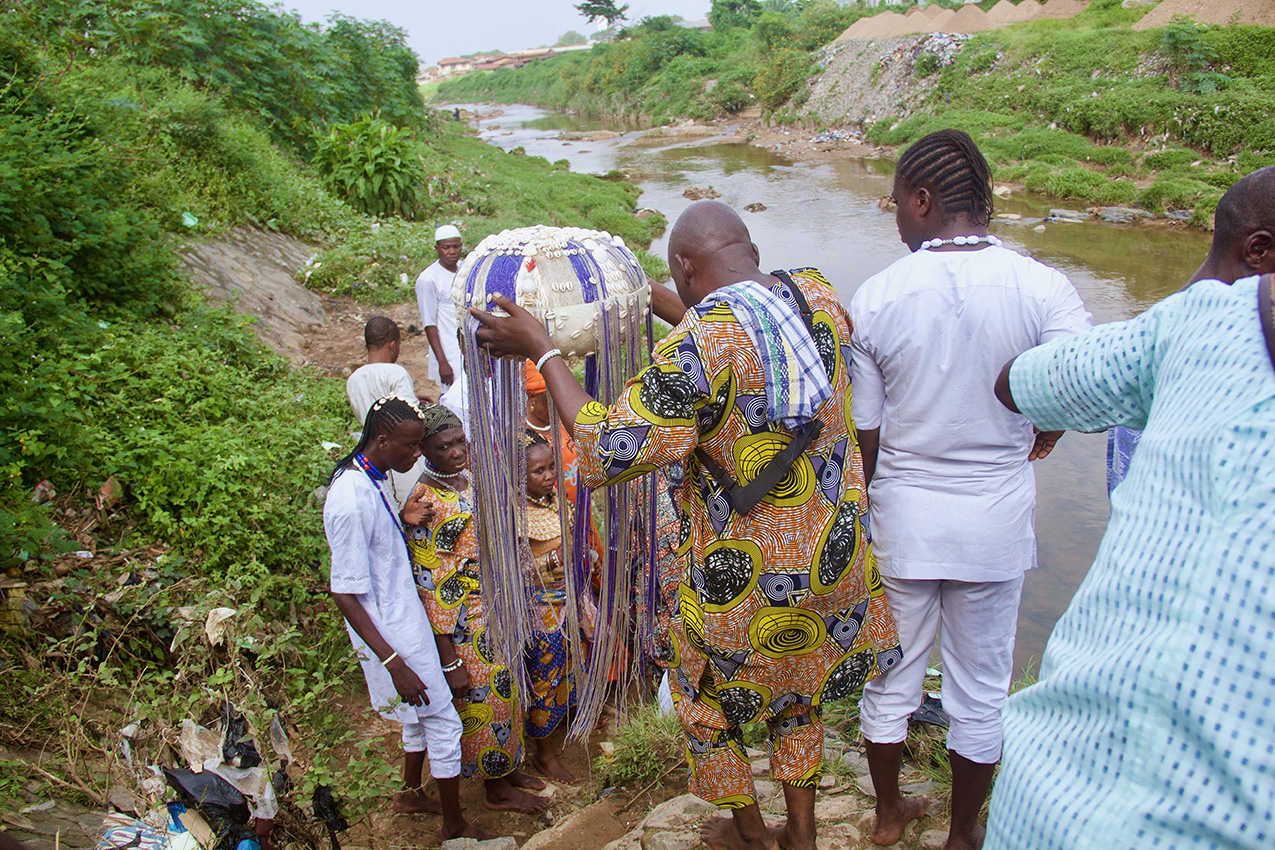
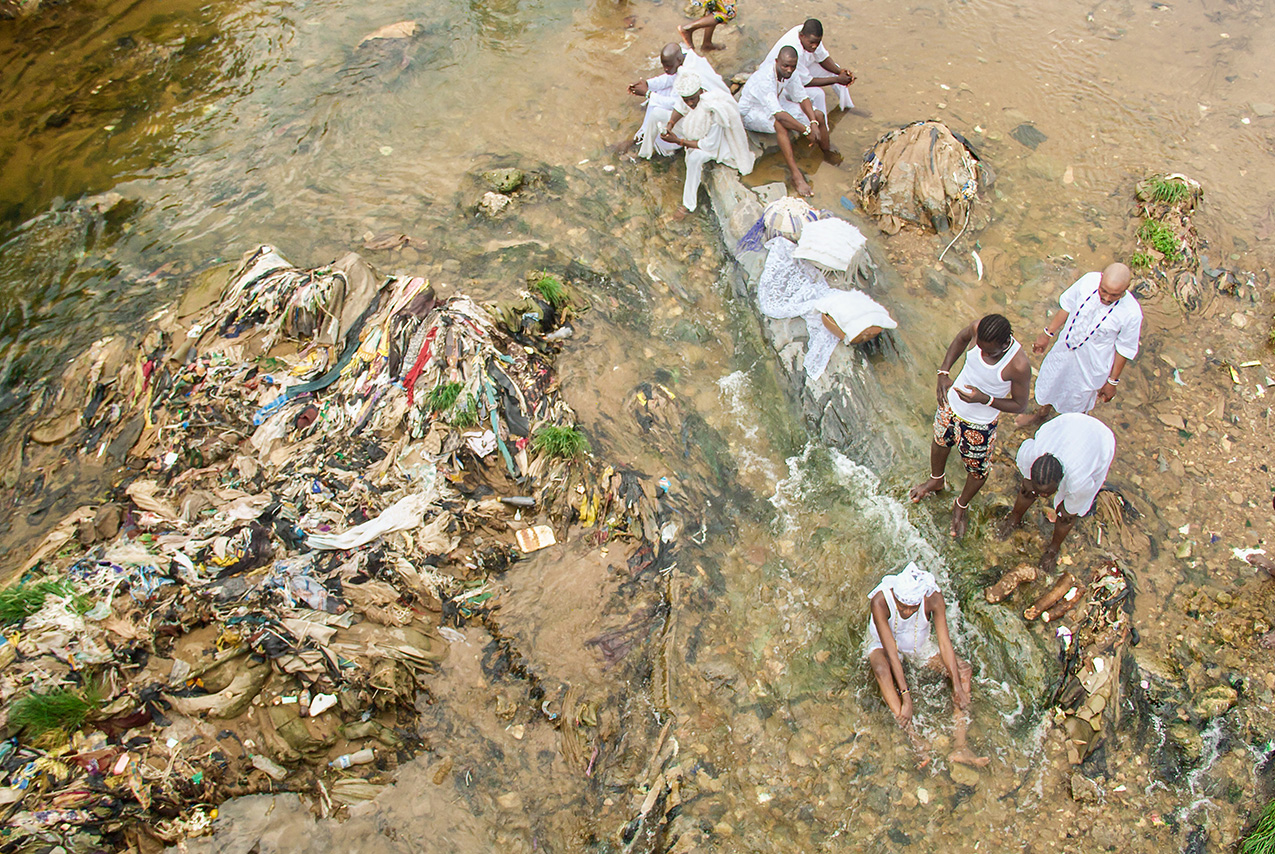
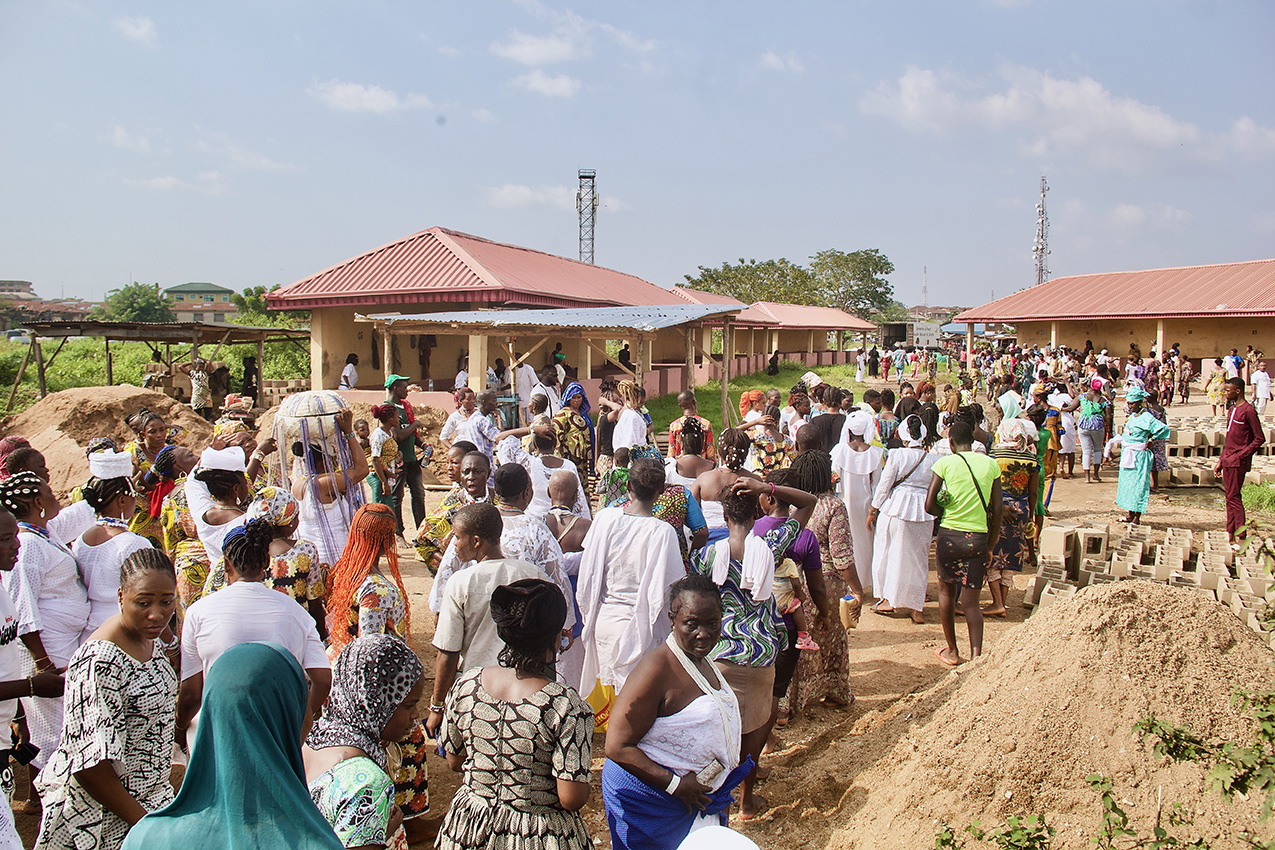
Each year in Ibadan, devotees filled with heart of gratitude, gather at this river to honour Yemoja, the Yoruba goddess of water, motherhood, and origin.
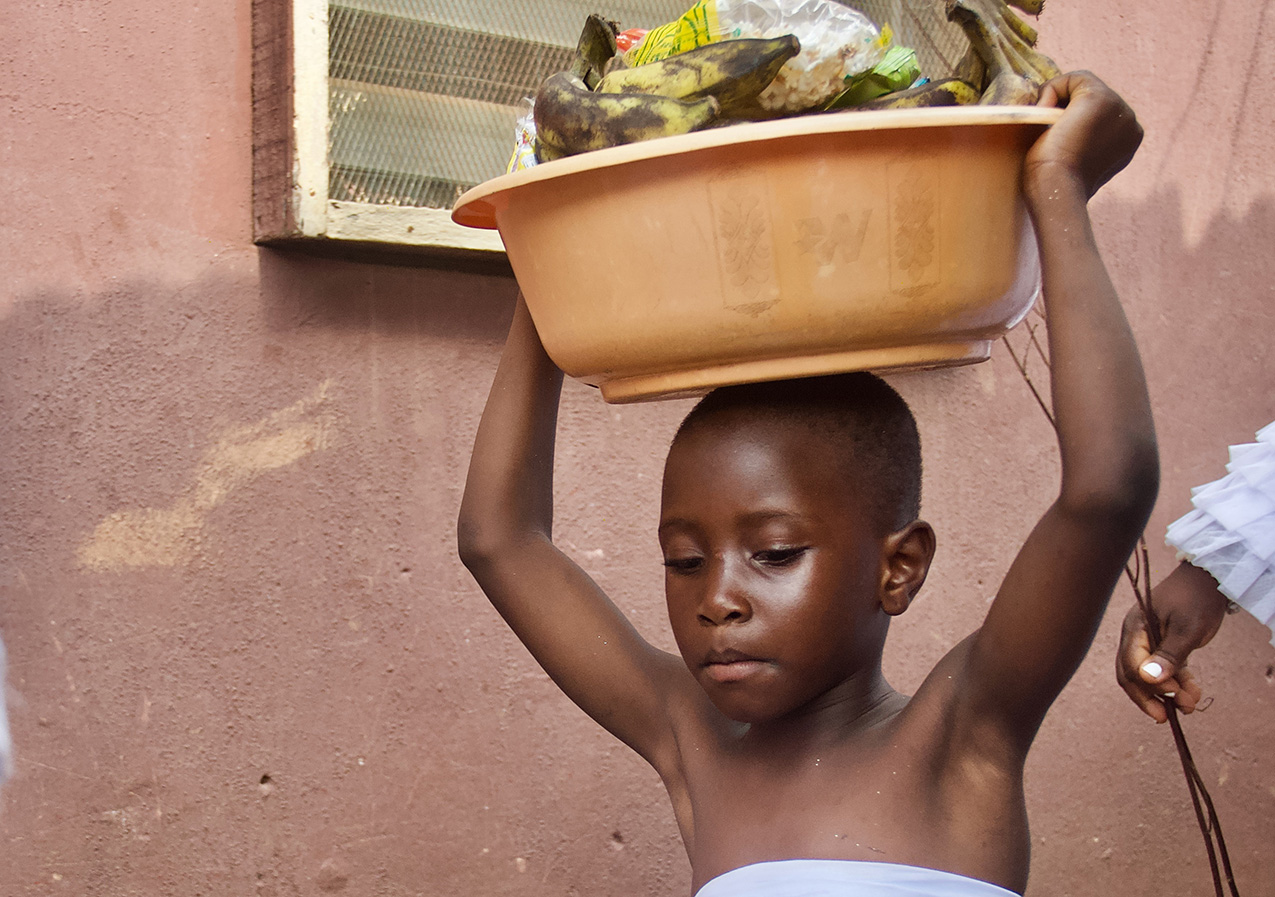
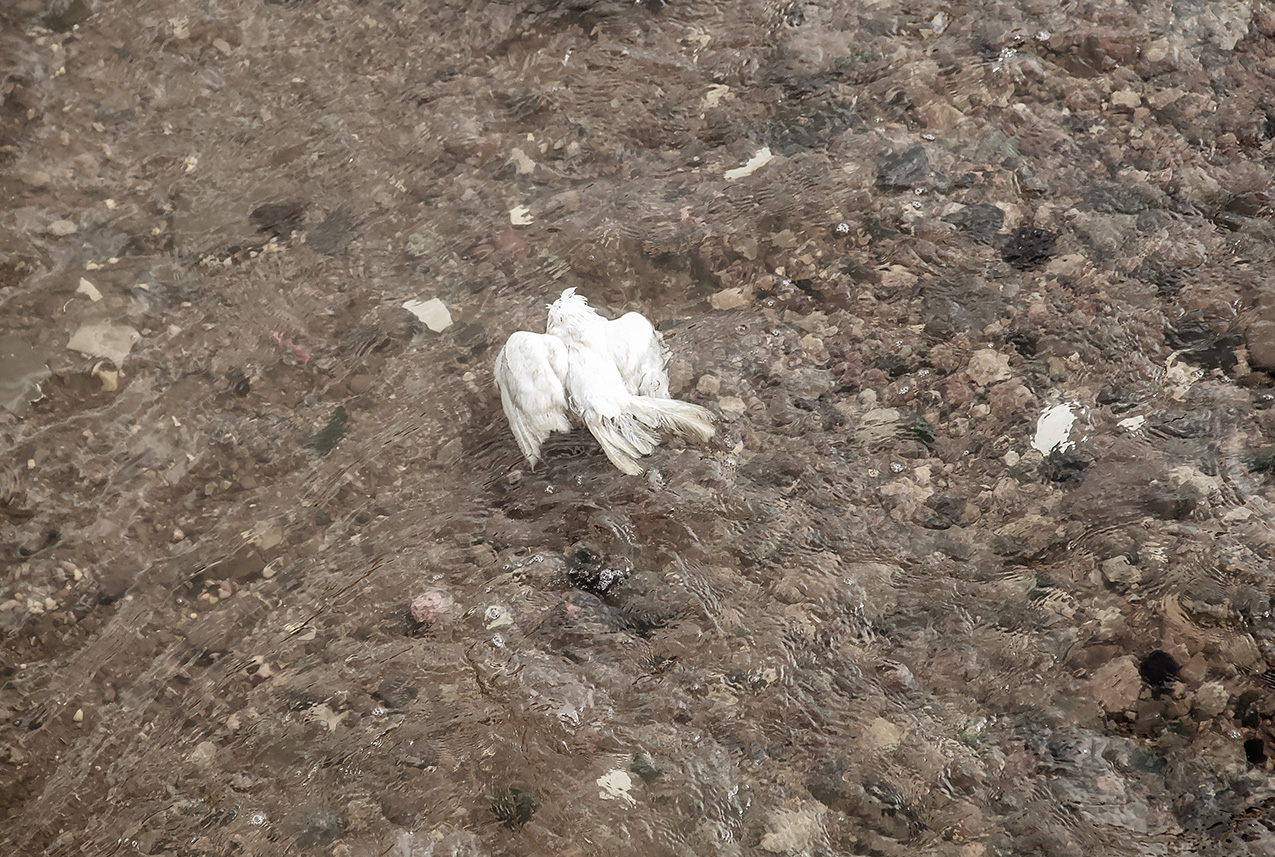
For these worshippers, they see the river as not merely a landscape and a living presence, rather they see it as an ancestral body through which prayers, memory, and protection flow. As a way of expressing their gratitude, male and female, young and old offers fruits, yam, Schnapps, pigeons and more. This, they believe helps renew a relationship that stretches across generations.
This work documents the festival as a moment where spiritual and communal bonds to a place are reaffirmed. The river holds stories of lineage, migration, and devotion; returning to its banks is an act of remembrance and continuity. Through ritual, worshippers sustain an intimate dialogue with water as ancestor, healer, and witness.
The images bring to the fore enduring ties between people and river, revealing how sacred practice keeps ancestral presence alive even within a changing landscape.