Jake tries the door of the chicken coop. Locked. He tries again. The door won’t budge. He’s stuck with 8 other conscientious objectors in a 10×12 space. Where am I? Jake wonders. He had signed up to be a smoke jumper, to fight forest fires in Colorado. The train had reached Colorado, all right, but then it had stopped. Jake and the other men were taken off the train by bayonet, marched up a hill, onto a farm, and locked into a chicken coop. Is this the smoke jumper training camp? Jake wonders. Is this where we’ll live? It was where he would live, detained, for the last two years of World War II.
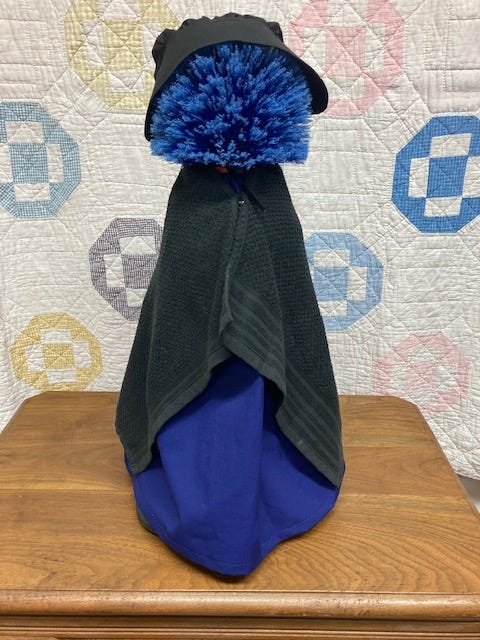
This is a scene from my new play called Coop, an object theatre production. For the last couple of months, I’ve been touring this drama about the mistreatment of Amish conscientious objectors in World Wars I and II. Rip Russell, my actor, and I have been performing in Iowa churches, old opera houses, in small spaces tucked away in radio stations and puppetry centers. We pride ourselves on our ability to perform anywhere for any audience. We don’t need fancy curtains, lights, and audio equipment. We don’t need large auditoriums filled with hundreds of people looking at us through binoculars.
Instead, Rip loves to be up close to the audience. Before we began hitting the road in Iowa, we tried out the show in Ireland, snuggling up to the bars of pubs. The Irish understand the strains of war, of one dominant group taking control and power over another. Their history is filled with conquerors and colonialists. Quickly, they grasped the ideas in the show.
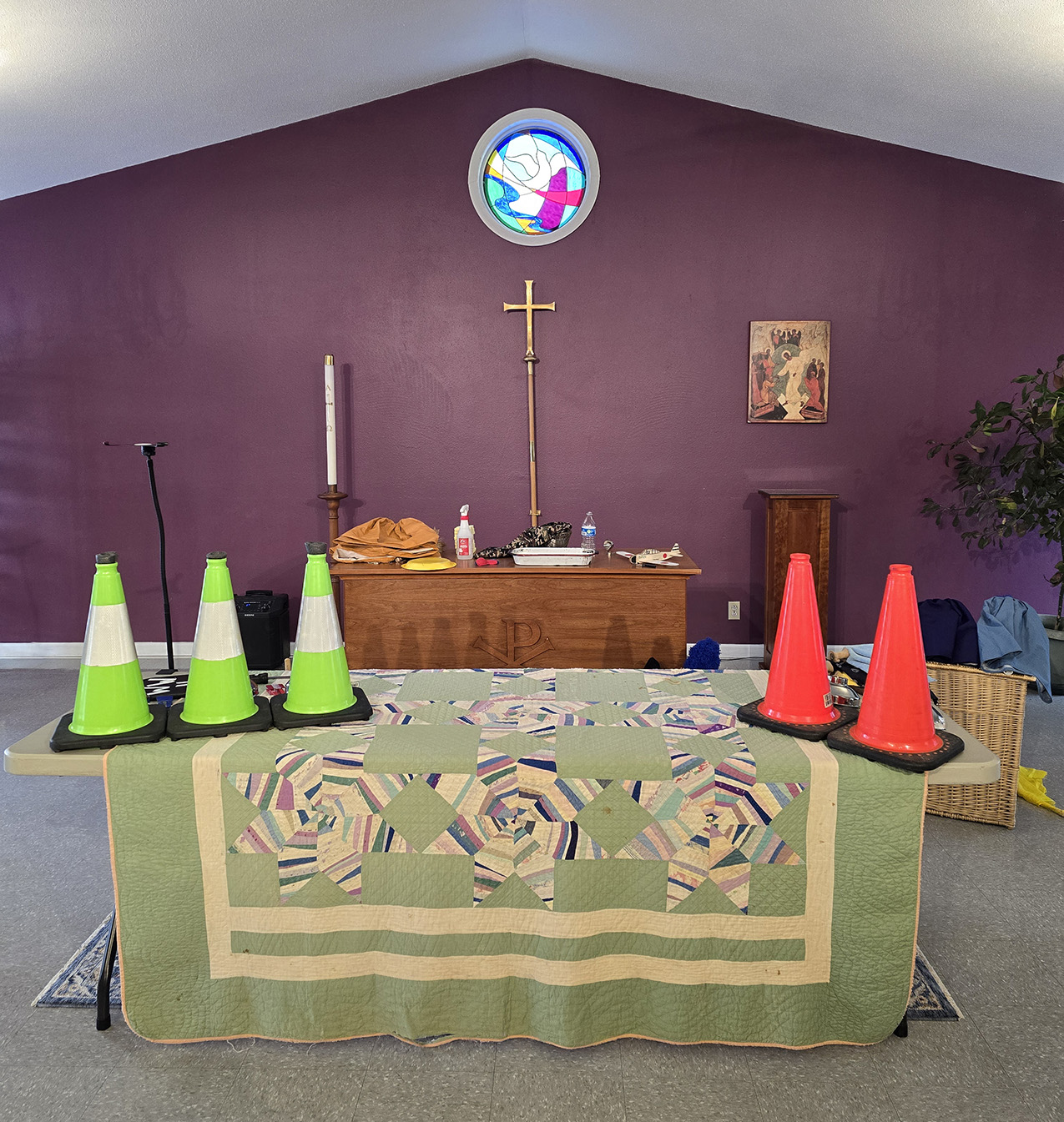
In Iowa, we were right on top of our audiences, their pained expressions reflecting the tragedies of the last few weeks. The political themes of the play eerily reflected the events of our current day. Last Saturday, we performed in a small Episcopalian church in Coralville. Before the show, I called for a moment of silence to honor the life of the man in Minneapolis who had been shot by ICE that morning. We didn’t have a name yet. We didn’t know the circumstances. Hadn’t seen the videos. We’d just heard senior administration officials call him a “domestic terrorist.” We suspected we were being gaslit.
Jake, the C.O. in my play, was called a “conchie, yellow, stupid, dumb, and filthy.” Conscientious objectors in his Amish community were hanged in effigy, houses drenched in yellow paint by non-Amish residents. Flashbacks to Amish treatment during World War I included exposure to extreme cold, shackling, hanging men by their wrists from the ceiling, and even waterboarding.
“How can people be so mean?” an audience member asked during the talkback after the show, a question that has been posed over and over again on our tour.
Conscientious objectors were not popular, I tried to explain. Americans were sending their sons to war, then seeing many of them come home in coffins. Americans asked: Was it fair that the Amish, Hutterites, Quakers and members of other peace groups avoided combat? And weren’t the German-speaking Amish spies?
And what about the environment that’s created in any war or occupation? Detention camps with confinement in barracks, dungeons, brigs, and even chicken coops. Then there’s the prisoner/guard roles all functioning within a hierarchy of “chain-of-command.” One human given complete power over another. Of course, things can go off the rails.
In 1971, Professor Phillip Zimbardo ran a controversial experiment in the psychology department at Stanford University. Zimbardo thought bad environments created bad behavior. To test his hypothesis, Zimbardo designed a two-week simulation of a prison environment. The study attempted to investigate subjects’ responses to role-playing prisoners and guards in confinement.
Volunteers signed up from the local community and received $15/day. They were screened for psychological stability, then randomly assigned roles as prisoners or guards. Things quickly deteriorated with some of the guards brutally abusing the prisoners. After only 6 days, Zimbardo stopped the experiment. He thought his ideas were verified.
The experiment was criticized for its biases, ethics, and methodology. Zimbardo was accused of reaching his conclusion before the experiment began. The philosopher Eric Fromm argued that only a third of the guards were sadistic toward the prisoners. In his mind, the personality of an individual, then, does not affect behavior when imprisoned.
But Zimbardo clung to his theory. Years later after the Abu Ghraib scandal, Zimbardo was appalled that the prison abuse in Iraq, so similar to what played out in his experiment, was blamed on just “a few bad apples.” He thought any one of us could flip into an abusive role at any time. He argued that we all have the capacity for love and evil—to be Mother Theresa, to be Hitler, or Saddam Hussein. It’s the situation that brings that out.”
Wartime military prisons, by anyone’s standard, are not good places. And now our streets are not good places, either. The guards have taken to the street to detain, round up, abuse, and even kill prisoners. People have been detained in camps. They can be heard calling out “Let us out!” People have been shot in their cars. People have been tackled and shot on the sidewalk, holding phones—not guns—in their hands.
Maybe we started with a lot of bad apples. Maybe the situation brought out the worst. Whatever. We have an attack that must stop.
At the end of Coop, Jake, still confined and refusing to put on the uniform of war, and still suffering abuse from his guards, sends an imaginary letter to his mother.
Mother, this is the battleground. Here inside my head. Inside this chicken coop. My guards are waiting for me to put on the uniform, and be free. Free. What is freedom? The military says it’s fighting for freedom. For whom? Certainly not for a lowly Amish C.O. stuck here with a bunch of chickens.
Then Jake concludes with the irony of these lines from the Beatitudes:
Blessed are the poor in spirit,
For theirs is the Kingdom of Heaven.
Blessed are the pure of heart,
For they will see God.